🚆 Transport Chronicles Edition 19 – June 2026
✨ From Dialogue to Delivery
The first half of 2026 has seen UK Transport in Europe (UKTiE) engaging across Westminster, Whitehall and Brussels to help ensure that transport, trade and connectivity remain at the heart of the evolving UK-EU relationship.

Earlier this year, we also convened a summit in Leeds, bringing together UK transport stakeholders to help shape priorities for the next phase of UK-EU cooperation. The focus is now increasingly shifting from dialogue to delivery.
Through our summit in Leeds, engagement with government, Parliament and industry, and ongoing dialogue with European institutions, we have continued to make the case that transport, trade and connectivity should sit at the heart of the UK-EU relationship.
After all, the UK-EU relationship is fundamentally about economic growth, competitiveness and prosperity.
Transport is the infrastructure that enables all three.
Efficient transport networks support trade, connect businesses with markets, facilitate tourism, enable labour mobility, strengthen supply chains and underpin investment. When people, goods, services and ideas move more easily, economies become stronger and opportunities expand.
That work now enters an important new phase.
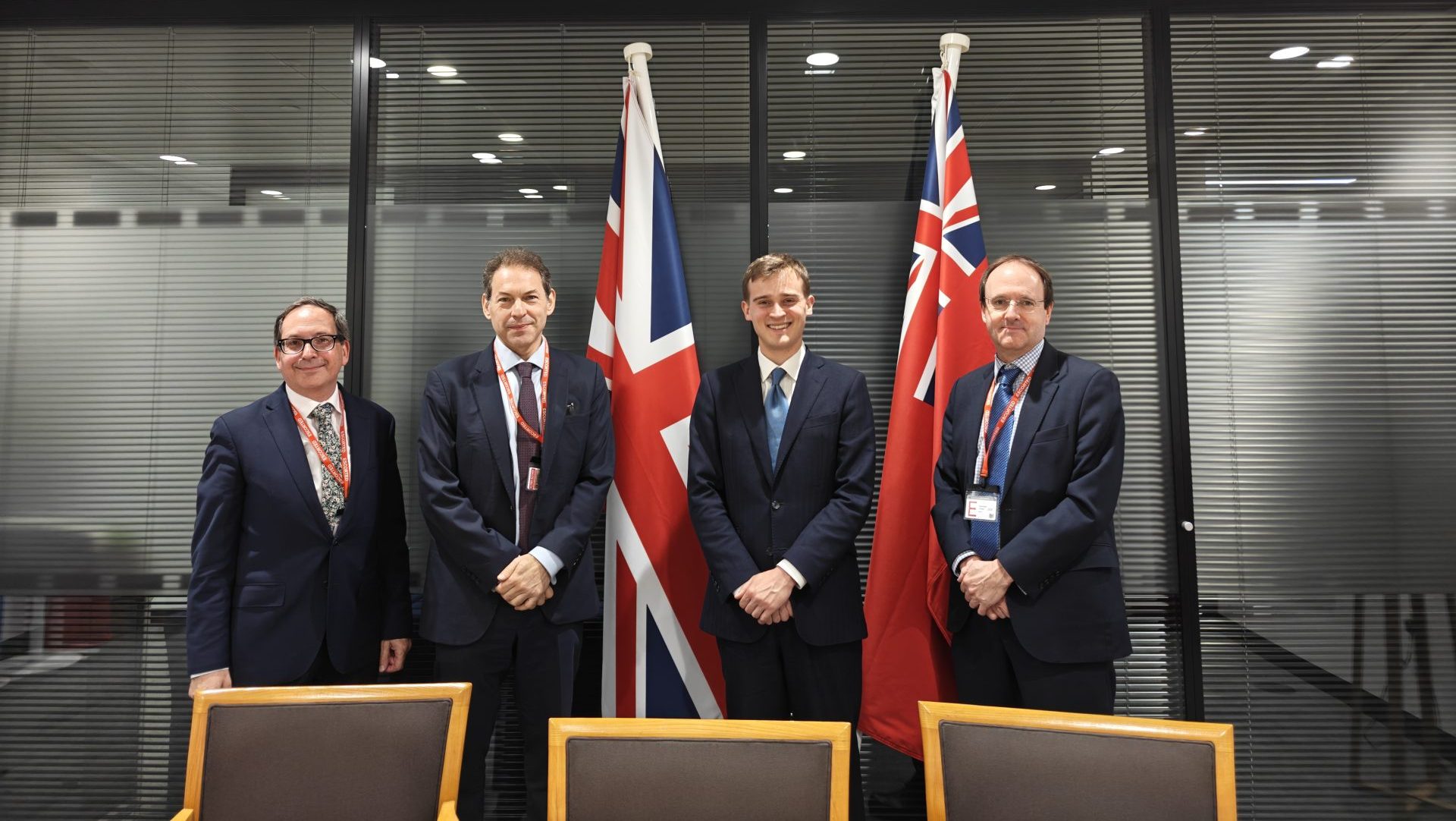
As Ireland assumes the Presidency of the Council of the European Union and discussions on the future UK-EU relationship continue, UKTiE will return to Brussels on 1-2 July for a programme of meetings with the European Commission, Members of the European Parliament and other key stakeholders.
The focus is increasingly shifting from political agreements towards implementation, delivery and practical cooperation.
For transport stakeholders, the message is clear: developments in Brussels increasingly matter.
Passenger rights, border management, freight operations, transport technology, sustainability frameworks, mobility rules and digital systems all have the potential to shape the environment in which UK transport operators, infrastructure providers and travellers operate.
In this edition, we examine the changing policy landscape, preview UKTiE’s Brussels programme, explore key developments affecting the sector and assess what they may mean for transport, trade and connectivity in the months ahead.
📩 For more information, or if you would like to join or support UKTiE, please get in touch.
🚆 🚗 🚢 ✈️
1. Transport, Trade and Connectivity at the Heart of the Reset
Recent months have seen important progress in UK-EU relations. Agreement in principle on a new SPS framework for agri-food trade, advancing discussions on Erasmus+ and youth mobility, and progress towards linking the UK and EU Emissions Trading Systems have all contributed to a noticeably more constructive atmosphere in both Brussels and London.
While political timetables may evolve, the direction of travel remains clear. The now-postponed UK-EU Summit was widely expected to help consolidate progress across a number of these areas and set the framework for implementation. Although the timetable may have shifted, the underlying agenda of closer practical cooperation remains firmly in place.
One of the most significant measures announced in the King’s Speech was the proposed European Partnership Bill. While it has received relatively little attention outside Westminster, its importance should not be underestimated. The Bill provides the legal framework needed to implement many of the agreements emerging from closer UK-EU cooperation, including arrangements relating to SPS, emissions trading, energy and mobility. Crucially, it also enables future changes to be made through secondary legislation where necessary to give effect to agreements reached with the European Union.
One of the most significant measures announced in the King’s Speech was the proposed European Partnership Bill. Its significance extends beyond implementation. The Bill reflects a wider recognition that, where the UK and EU choose to cooperate more closely, developments in Brussels will increasingly matter for UK businesses, regulators and transport operators. As highlighted in the King’s Speech, the Government is prepared to pursue closer regulatory cooperation and alignment where this supports economic growth, reduces friction and delivers practical benefits.
For transport, this could have important implications. Current discussions in Brussels on issues such as passenger rights, digital mobility, border management, sustainability frameworks, transport decarbonisation and data-sharing arrangements may increasingly shape the environment in which UK transport operators, infrastructure providers and travellers operate.
This represents an important change in mindset. The question is no longer simply how the UK responds to EU legislation after it has been adopted. Increasingly, the challenge is ensuring that UK interests are understood and reflected while policies are still being developed.
For UKTiE, this reinforces the importance of maintaining a strong presence in both Brussels and Westminster. If transport, trade and connectivity are to sit at the heart of the evolving UK-EU relationship, engagement in the policymaking process must begin long before legislation reaches the statute book.

2. UKTiE Engagement Across Westminster, Whitehall and Brussels
As discussions on the future UK-EU relationship increasingly turn towards implementation, delivery and practical cooperation, UKTiE has continued an active programme of engagement across Westminster, Whitehall and Brussels, alongside convening a summit for UK transport stakeholders in Leeds.
Recent discussions have included meetings with MPs, peers, the Transport Minister with responsibility for Europe, the Chair and members of the House of Commons Transport Select Committee, officials from the Department for Transport, European Commission representatives, Members of the European Parliament and transport stakeholders from across Europe.
These discussions have focused on practical opportunities to improve connectivity, reduce friction, support economic growth and advance sustainability objectives. Key topics have included border efficiency, freight and logistics, passenger mobility, infrastructure investment, regulatory cooperation and the wider implementation of closer UK-EU cooperation.
Perhaps most encouragingly, there is growing recognition across both London and Brussels that transport offers some of the quickest and most practical opportunities to translate political ambition into tangible economic and environmental benefits. Improved connectivity, more efficient borders, sustainable transport solutions and better mobility frameworks can support trade, strengthen competitiveness and deliver visible improvements for businesses and travellers alike.
The objective remains simple: to ensure that transport, trade and connectivity are fully reflected in the next chapter of UK-EU cooperation.

3. What Should UK Transport Stakeholders Be Watching?
Alongside developments in the UK-EU relationship, a significant transport policy agenda is now taking shape in Brussels. As cooperation between the UK and EU evolves, these developments are likely to become increasingly relevant for transport operators, infrastructure providers, regulators and travellers alike.
The recent breakthrough on the long-running Air Passenger Rights Regulation (EC261) marks an important step forward for aviation passengers and airlines, providing greater certainty after more than a decade of negotiations. Formal adoption is expected in the coming months.
At the same time, the European Commission is advancing its wider “One Journey, One Ticket” agenda through proposals on multimodal booking, rail ticketing and integrated passenger rights. The objective is to make cross-border travel easier by allowing passengers to search, compare and book journeys across multiple operators and modes through a more seamless digital transport marketplace.
Looking ahead, the incoming Irish Presidency has placed transport firmly at the heart of Europe’s competitiveness agenda. Key priorities include:
🚆 Investment in the Connecting Europe Facility (CEF) and the Trans-European Transport Network (TEN-T)
🚢 Strengthening maritime competitiveness, ports policy and maritime skills
✈️ Revision of the Air Services Regulation, including airline licensing, market access and pricing transparency
🛫 Development of a new EU Aviation Strategy
🚗 Progressing the Automotive Simplification Package and wider efforts to reduce unnecessary regulatory burdens while maintaining high standards
🎫 Advancing digital ticketing, multimodal mobility and passenger information systems
🌱 Supporting transport decarbonisation while maintaining competitiveness and ensuring a just transition
🛡️ Strengthening the resilience of critical infrastructure and transport networks
Together, these initiatives point towards a common theme: better connectivity. Whether through smarter borders, integrated ticketing, stronger transport infrastructure, improved market access, more sustainable transport systems or more efficient regulation, transport is increasingly being recognised as a critical enabler of growth, competitiveness and resilience across Europe.
Importantly, the Irish Presidency has made clear that these ambitions are not being pursued in isolation. Alongside its extensive transport agenda, the Presidency has also committed to strengthening relations with the UK, recognising the importance of close cooperation between neighbours, trading partners and interconnected transport networks.
For UK transport stakeholders, that is an encouraging signal. Many of the priorities now being discussed in Brussels – from aviation and rail to ports, borders, freight, sustainability and passenger mobility – are issues where continued UK-EU cooperation can deliver practical benefits for businesses, passengers and economies on both sides of the Irish Sea and the Channel.
💬 Quote of the Month
“The Irish Presidency will be ambitious in promoting positive EU-UK relations.”
Irish Presidency Programme 2026
4. Looking Ahead
The focus is increasingly shifting from agreements to outcomes.
With the Irish Presidency due to begin on 1 July, UKTiE will continue its engagement with policymakers and stakeholders in both Brussels and London as the focus increasingly shifts from dialogue towards the implementation of many of the initiatives emerging from the evolving UK-EU relationship.
The challenge is no longer identifying opportunities for cooperation. It is ensuring that those opportunities are translated into practical improvements for passengers, businesses and transport operators.
Alongside these milestones, stakeholders should continue to monitor developments on passenger rights, multimodal ticketing, transport decarbonisation, aviation policy, maritime competitiveness and wider UK-EU transport cooperation as the Irish Presidency programme develops.
For UKTiE, the priority remains unchanged: ensuring that transport, trade and connectivity continue to be recognised as practical drivers of growth, competitiveness, sustainability and prosperity on both sides of the Irish Sea and the Channel.
Key Dates to Watch
📅 1 July 2026 – Ireland assumes the Presidency of the Council of the European Union
📅 1-2 July 2026 – UKTiE Brussels engagement programme with the European Commission, Members of the European Parliament and transport stakeholders
📅 15-16 July 2026 – European Parliament TRAN Committee meeting
📅 2-3 September 2026 – European Parliament TRAN Committee meeting
📅 28 September – 1 October 2026 – Connecting Europe Days 2026, Brussels
📅 30 November 2026 – Transport, Telecommunications and Energy (TTE) Council (Transport), Brussels
5. Join the Conversation
UKTiE continues to bring together industry, policymakers and stakeholders from across the transport sector to help shape the future of UK-EU transport, trade and connectivity.
If you would like to support our work, participate in future events, contribute to policy discussions or become part of the conversation, we would be delighted to hear from you.
🚆 🚛 🚢 ✈️
One sector. One voice. The voice of UK transport in Europe.
As we look ahead, UKTiE will continue to champion:
🔹 Connectivity
🔹 Competitiveness
🔹 Sustainability
By bringing together expertise from across the transport ecosystem, we aim to ensure that transport remains at the heart of economic growth, prosperity and cooperation between the UK and Europe.
Stay Connected
🌐 uktie.eu
📧 markwatts@lpbrussels.com
Mark Watts, CEO, UKTiE
No responses yet